
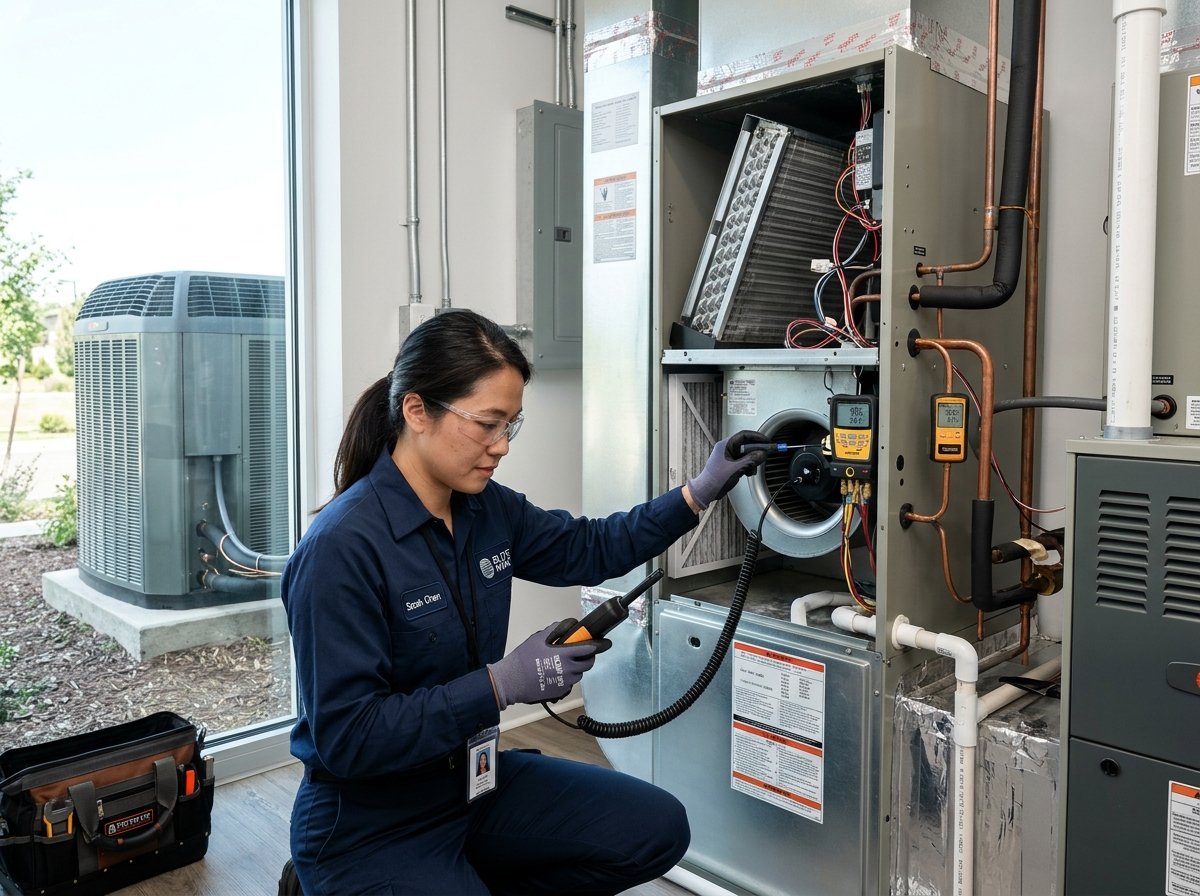
Why Clean Ducts Require a Clean Air Handler, Blower & Evaporator Coil
Even spotless air ducts will quickly re-foul if the mechanical heart of your forced-air system—the indoor air handler, furnace blower cabinet, and A-frame evaporator coil—is packed with impacted grease, pet hair, and microbial biofilm. In Southern California's extended 8-month cooling season, indoor evaporator coils remain continuously damp with condensation, turning bypassing filter dust into an insulating paste across delicate aluminum cooling fins.
Symptoms of Impacted HVAC Coils & Blower Wheels
- Iced-Up Refrigerant Lines: Restricted airflow across a dirty indoor coil drops coil temperature below 32°F, freezing condensation solid and halting cooling altogether.
- Dirty Sock Syndrome Odors: Bacterial and fungal biofilm growing on damp coil fins and stagnant condensate pans emits a sharp, sour odor whenever the AC cycles on.
- Weak Supply Register Pressure: Just 1/16 inch of dust caked inside curved squirrel-cage blower blades slashes air-moving capacity by up to 30%.
- Overflowing Condensate Drain Lines: Algae and dust sludge block PVC drain traps, risking ceiling drywall stains in attic air-handler installations.
Our Technical Multi-Point HVAC Hygiene Protocol
Air Duct Pros Services technicians isolate power at the disconnect switch, remove blower assemblies when impacted to degrease individual fan blades, apply non-acidic, coil-safe foaming cleaner to indoor evaporator and outdoor condenser fins, flush condensate drain traps with pressurized nitrogen/water, and verify proper 18°F–22°F supply-to-return temperature split (Delta-T) before buttoning up your cabinet.