
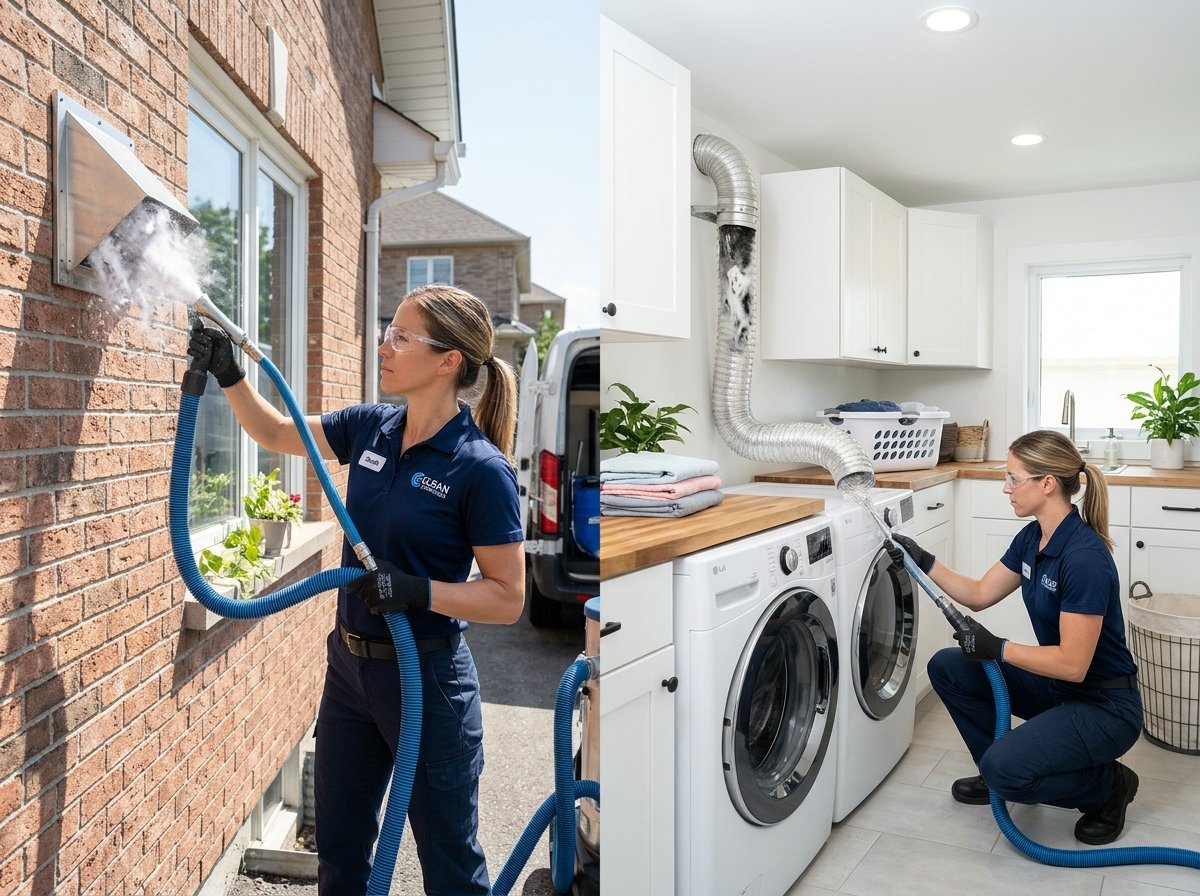
Protecting Los Angeles Homes & Duplexes From Clogged Dryer Exhausts
According to U.S. Fire Administration data, thousands of residential structure fires each year originate inside clothes dryers—and failure to clean compacted lint from the concealed exhaust pipe is the #1 root cause. Your dryer's slide-out lint screen captures roughly 70% of laundry fibers. The remaining 30%—combined with damp steam and waxy fabric-softener residue—adheres to 90-degree wall elbows, vertical risers, and rooftop termination hoods.
Warning Signs Your Dryer Vent Line Is Restricted
- Multiple Cycles Required: Jeans, bath towels, or bedding remain damp after a standard 45-minute cycle.
- Excessive Cabinet Heat: The top metal panel of the dryer or finished clothing feels scorching hot to the touch.
- Check Vent / d80 / d90 Error Codes: Modern LG, Samsung, and Whirlpool dryers trigger airflow block alerts at 80%–90% backpressure.
- Humid Laundry Room or Scorched Smell: Moist exhaust backs up into your hallway, risking carbon monoxide seepage on natural-gas dryers.
- Stuck Exterior Louver Flaps: When the dryer runs, the outside wall or roof flapper fails to blow fully open.
Our End-to-End Rotary & Pneumatic Dryer Vent Cleaning Process
At Air Duct Pros Services, we never stop at vacuuming behind the machine. Our technicians pull the dryer safely on appliance glides, measure baseline exhaust velocity (feet per minute) with a digital anemometer, and feed flexible rotary Auger brushes plus reverse-jet compressed air snakes through the entire 4-inch rigid galvanized pipe—from the interior wall box all the way to the exterior sidewall or second-story roof cap.
If we discover hazardous white vinyl or foil-accordion transition hoses behind your machine, we can upgrade them on the spot to UL-2158A semi-rigid aluminum connectors that resist crushing and high heat.